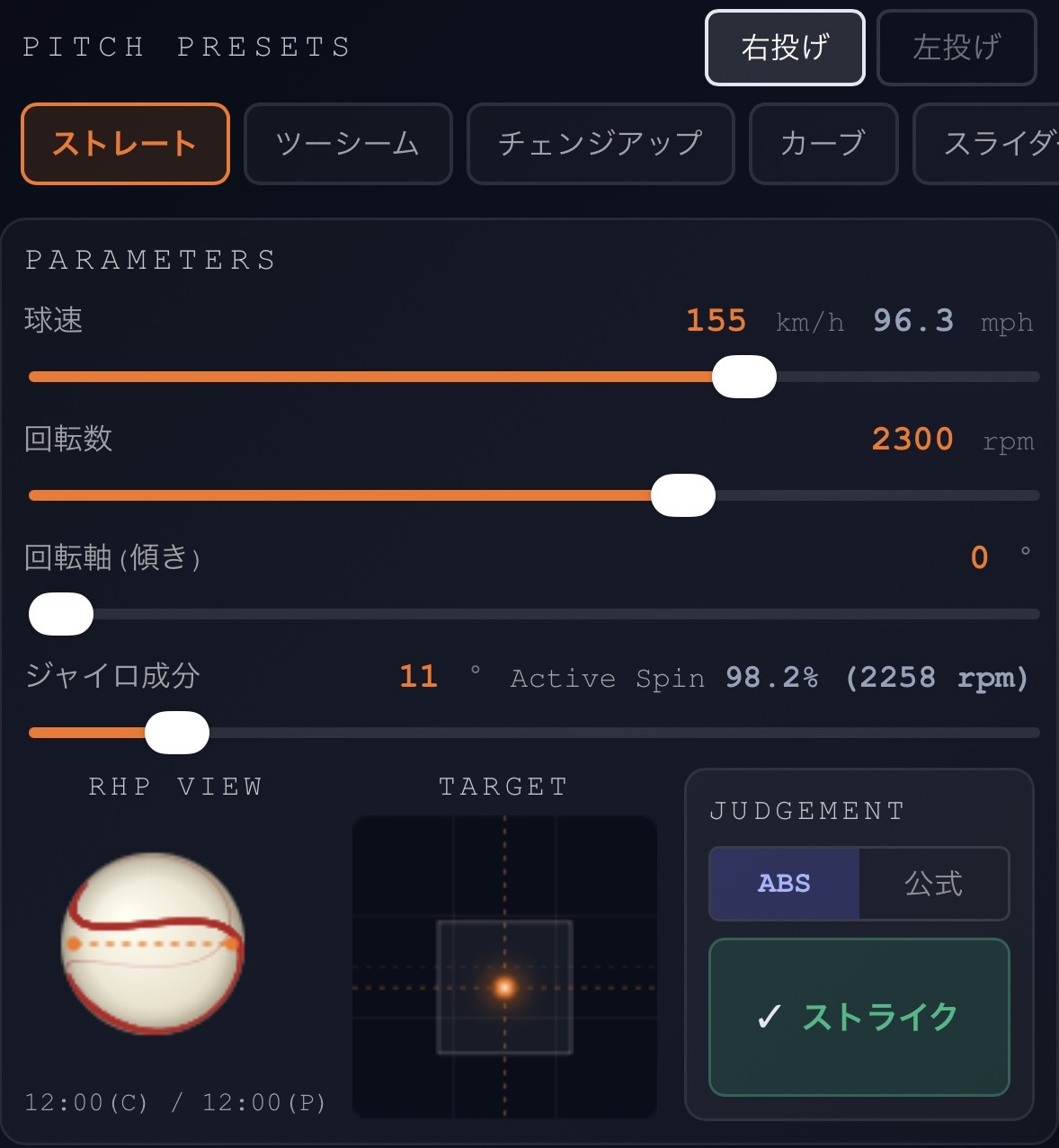
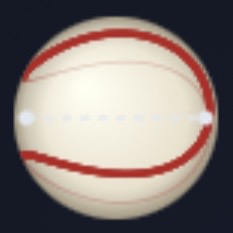
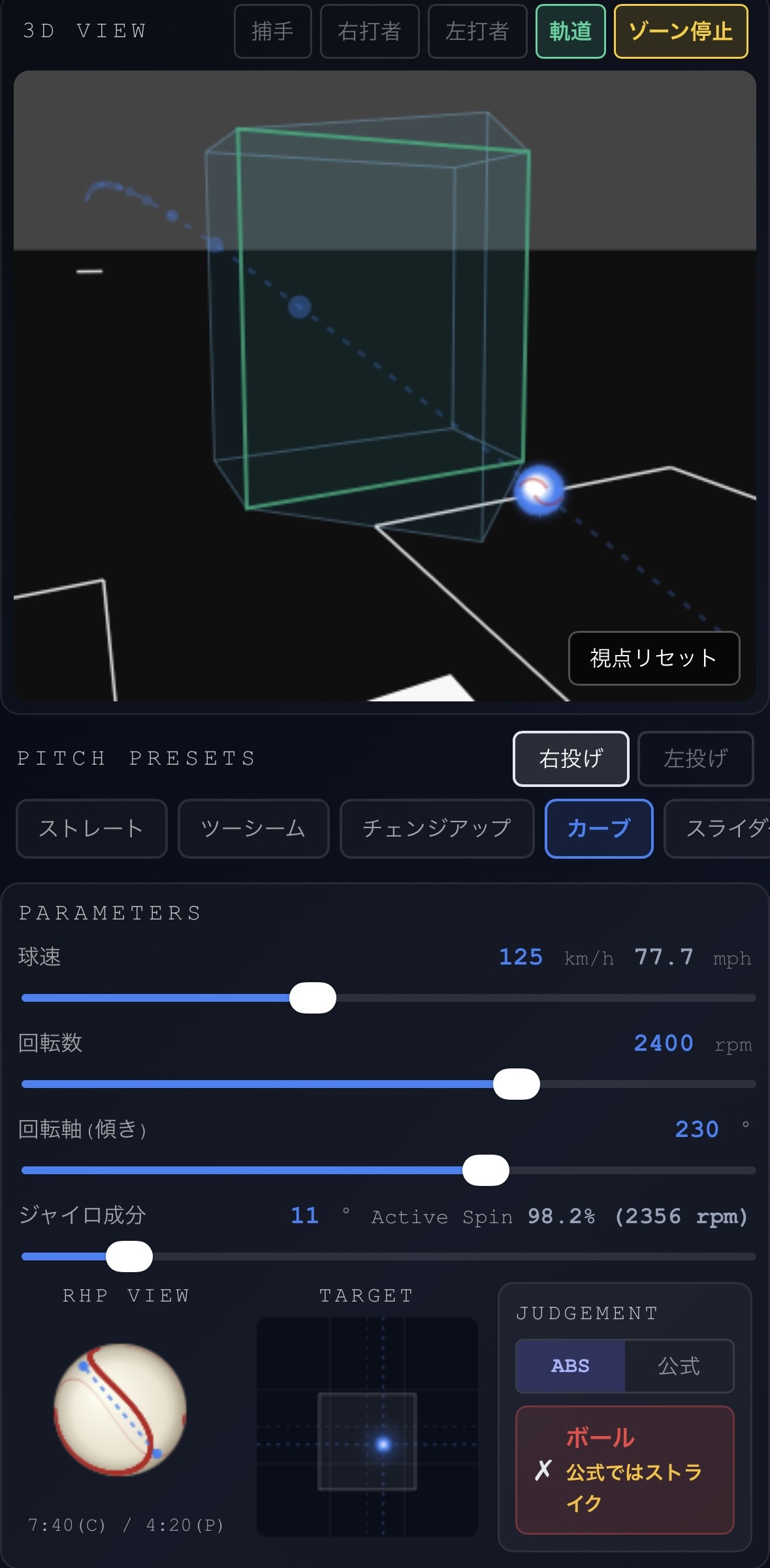
Adjust 4 parameters with sliders: speed, spin rate, Tilt, and gyro component. The 3D trajectory updates instantly as you move each slider.
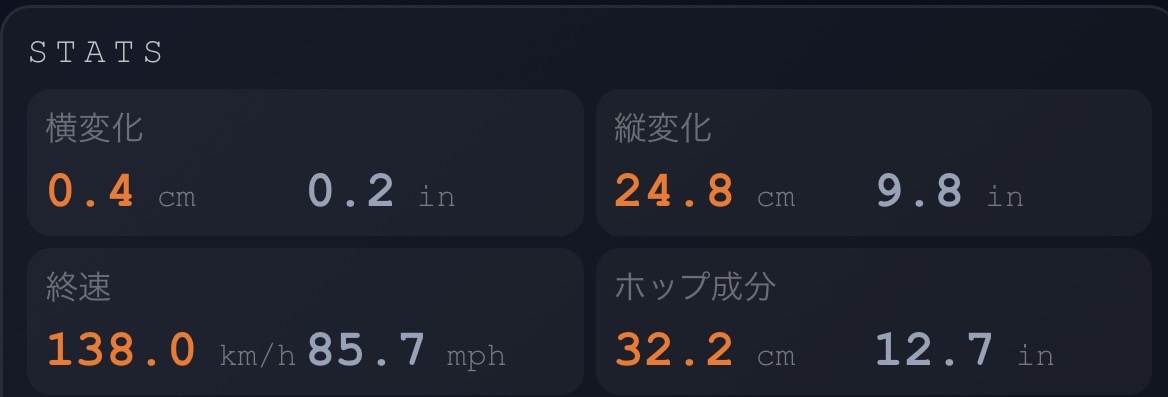
STATSStatcast Compatible
Displays horizontal break, vertical break (IVB), exit velocity, and hop component using Statcast definitions. Shows both cm and inches for easy cross-referencing.
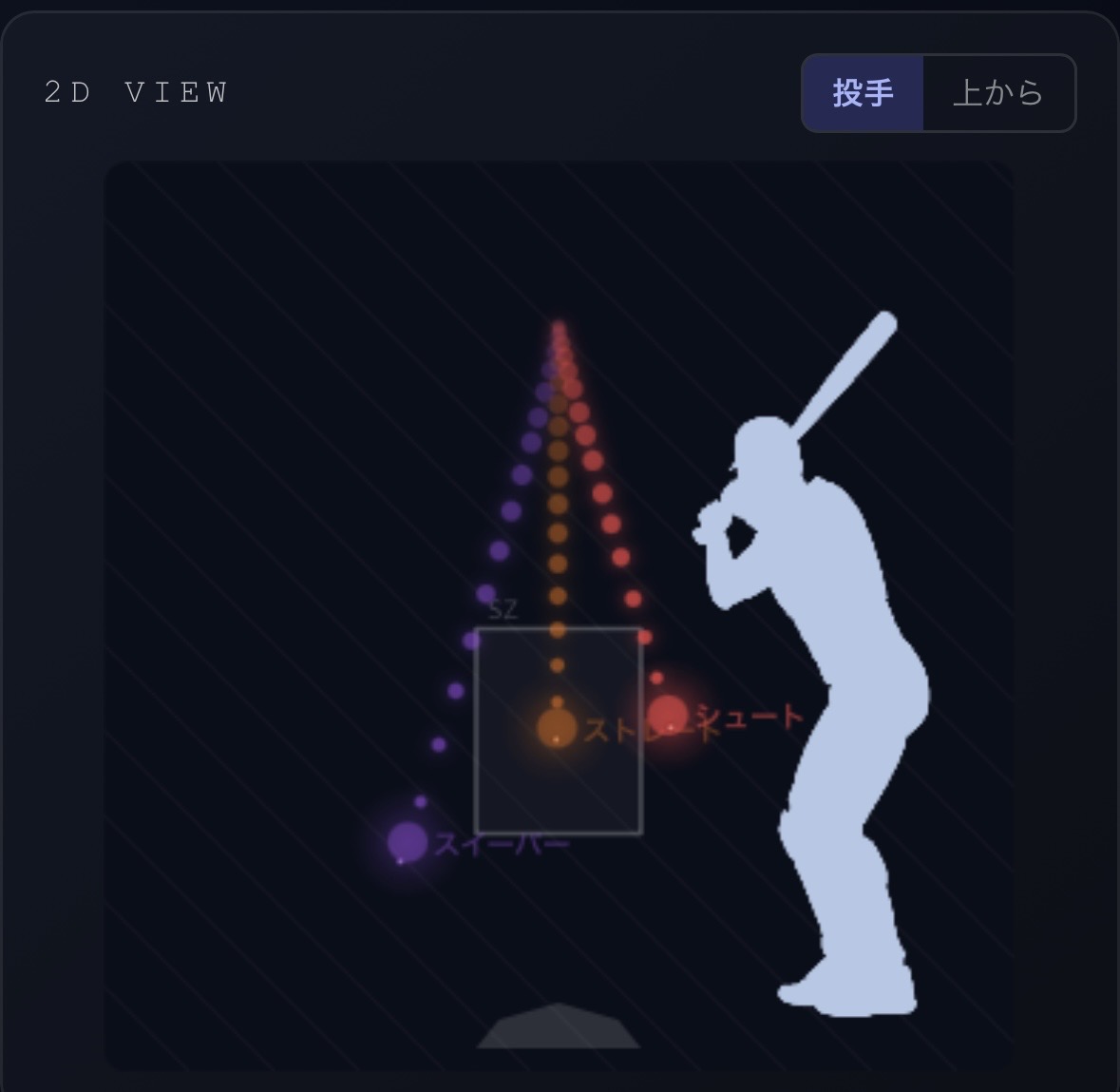
2D VIEWPitcher's Perspective
2D view from the pitcher's perspective. Instantly compare where a fastball, sweeper, and shoot land relative to each other.
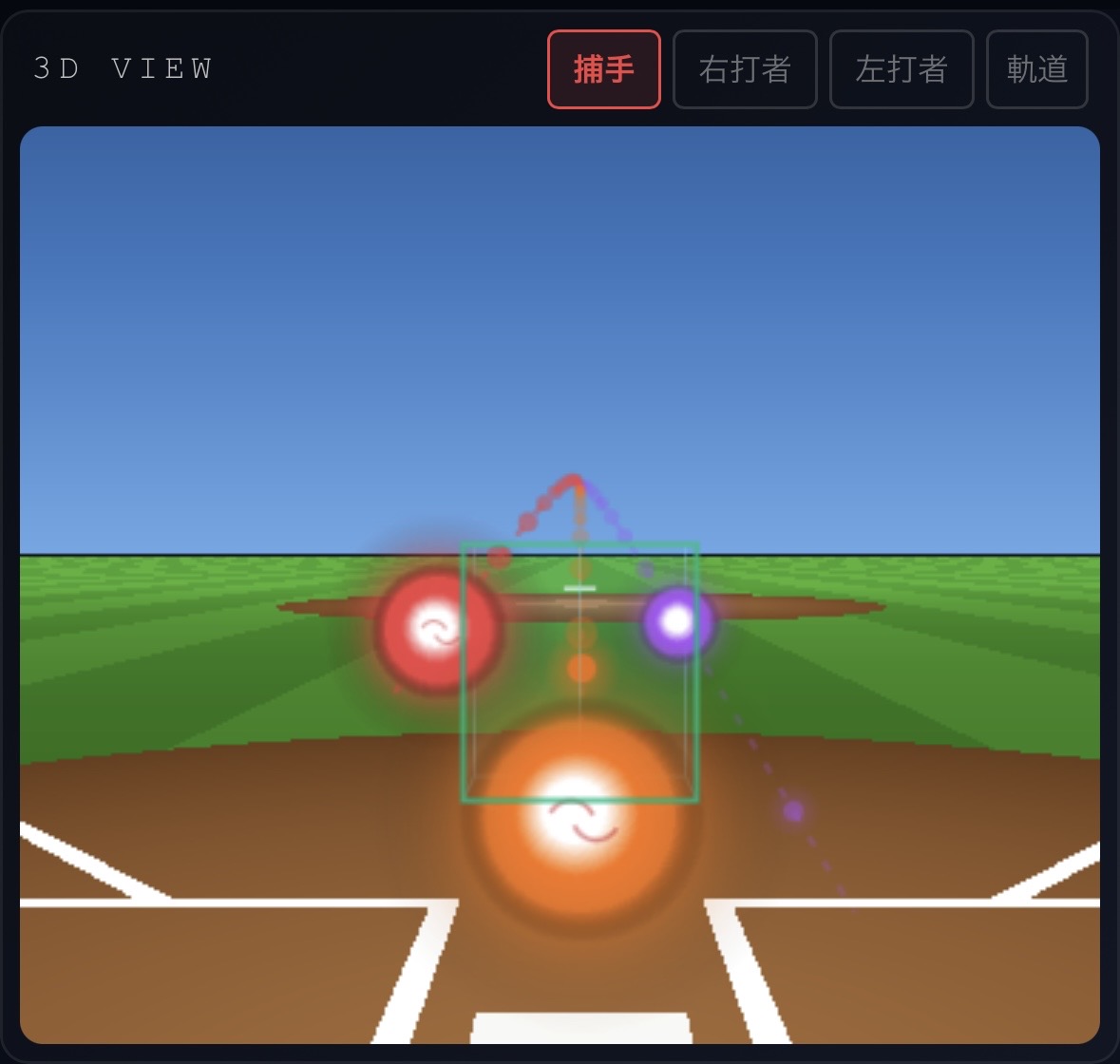
3D VIEWCatcher's View
See the pitch from behind the plate. Compare how different pitch types land inside or outside the strike zone in a single view.
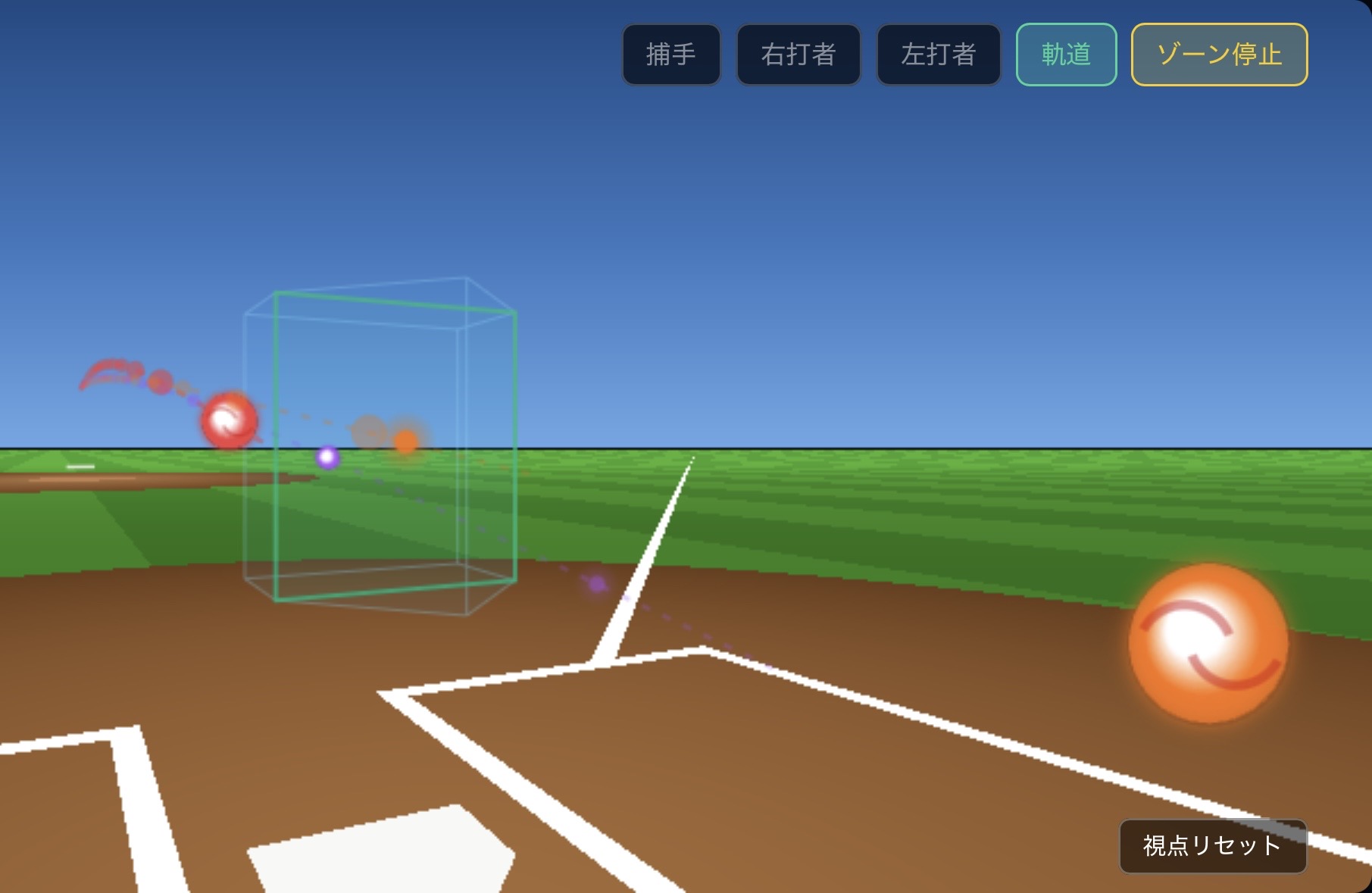
3D VIEWTrajectory Mode
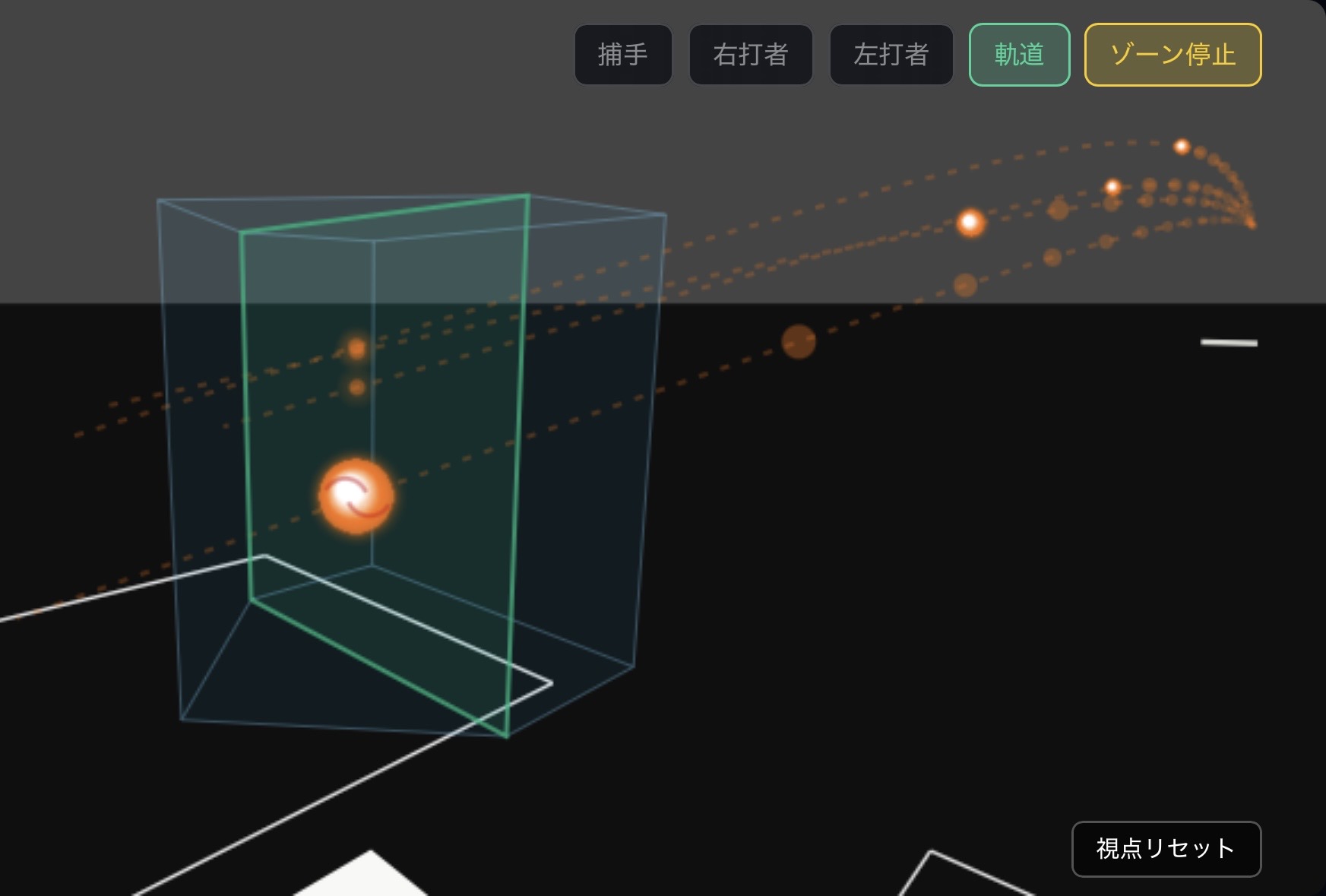
View multiple pitch trajectories in 3D from the pitcher's side. Drag to freely rotate the camera angle for any perspective.
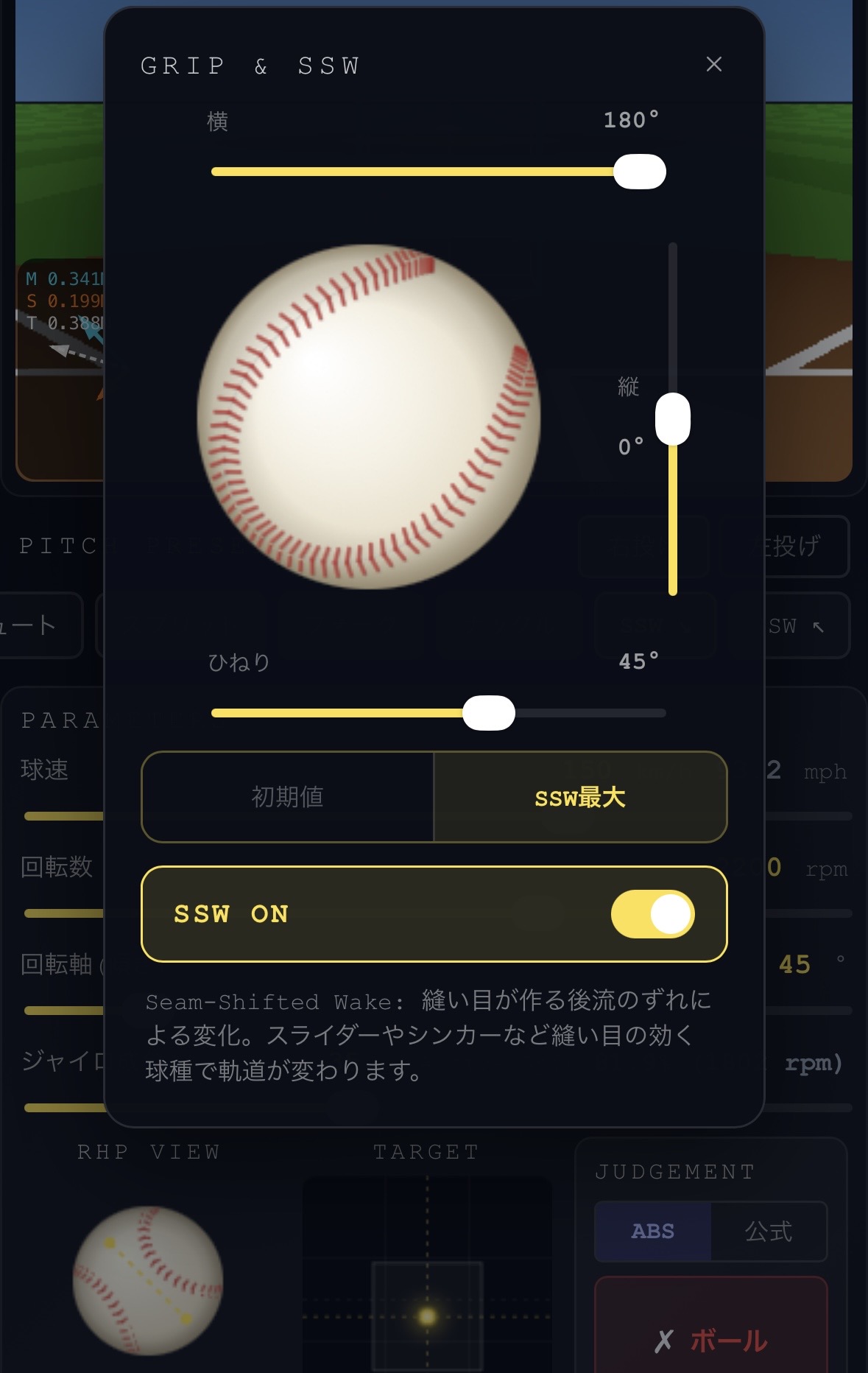
GRIP & SSWFeel the Seam Effect
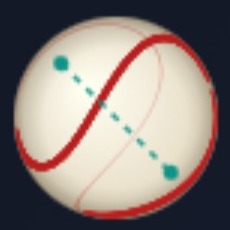
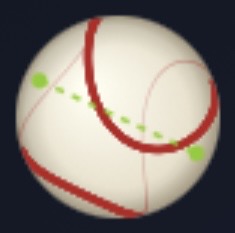
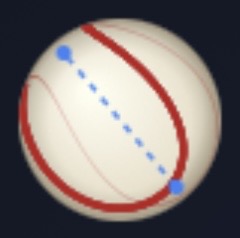
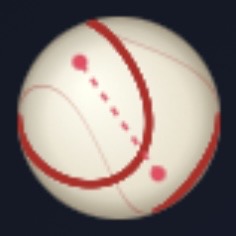
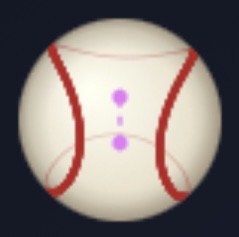
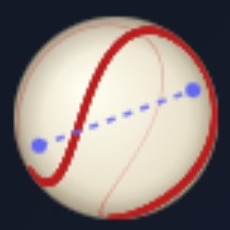
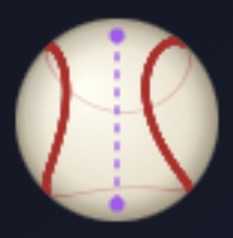
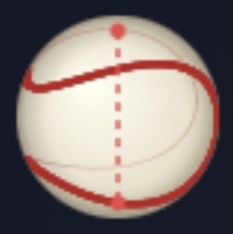
Tap the ball to open the GRIP & SSW dialog. Adjust seam orientation on 3 axes, compare trajectories with SSW ON/OFF, and auto-search for the optimal grip angle.
HOW IT WORKS
What Each Parameter Does to the Pitch
Four parameters define the trajectory. The more you tweak them, the more you understand the physics of each pitch.
SPEED
Faster pitches break less; slower pitches break more
Magnus force increases with speed, but faster pitches have less flight time, resulting in less total movement. Speed and break are a trade-off. That's why a slow curveball can break so much.
IVB: 96 mph → 9.8 in 81 mph → 10.9 in
SPIN RATE (RPM)
More spin = more movement
At 0 rpm, the ball drops like a knuckleball. Above 2500 rpm, movement increases dramatically.
1000 rpm → 2500 rpm~3x hop
SPIN AXIS (TILT)
Axis direction determines break direction
Statcast-standard clock notation from the catcher's view. 12:00 = backspin (hop), 6:00 = topspin (drop), 9:00 = sweeper direction.
9:00 (270°)Sweeper direction
GYRO COMPONENT
Gyro spin reduces Magnus force
At 0°, it's pure backspin (maximum Magnus). As gyro increases, Active Spin decreases and movement drops. At 90°, nearly zero movement.
gyro 0° → 45°Active Spin 100%→71%
PITCH GUIDE
15 Pitch Presets Ready to Explore
Select a preset to see a typical trajectory. Then fine-tune the parameters to match your own pitch.
Supports both RHP and LHP. Spin axis is automatically mirrored. * Spin axis / Tilt values below are for RHP (catcher's view).
Pseudo-knuckleball model. Uses sine-wave random perturbations to approximate flutter. Not a true seam-based SSW calculation.
SSW
Seam-Shifted Wake The "4th Force" from the Seams
The forces on a pitch aren't just gravity, drag, and Magnus. When seam orientation causes asymmetric airflow separation, a force independent of Magnus is generated. This is SSW (Seam-Shifted Wake).
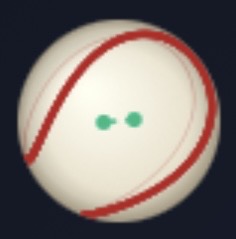
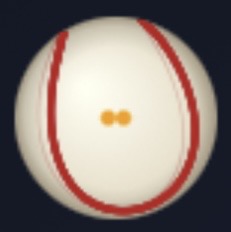
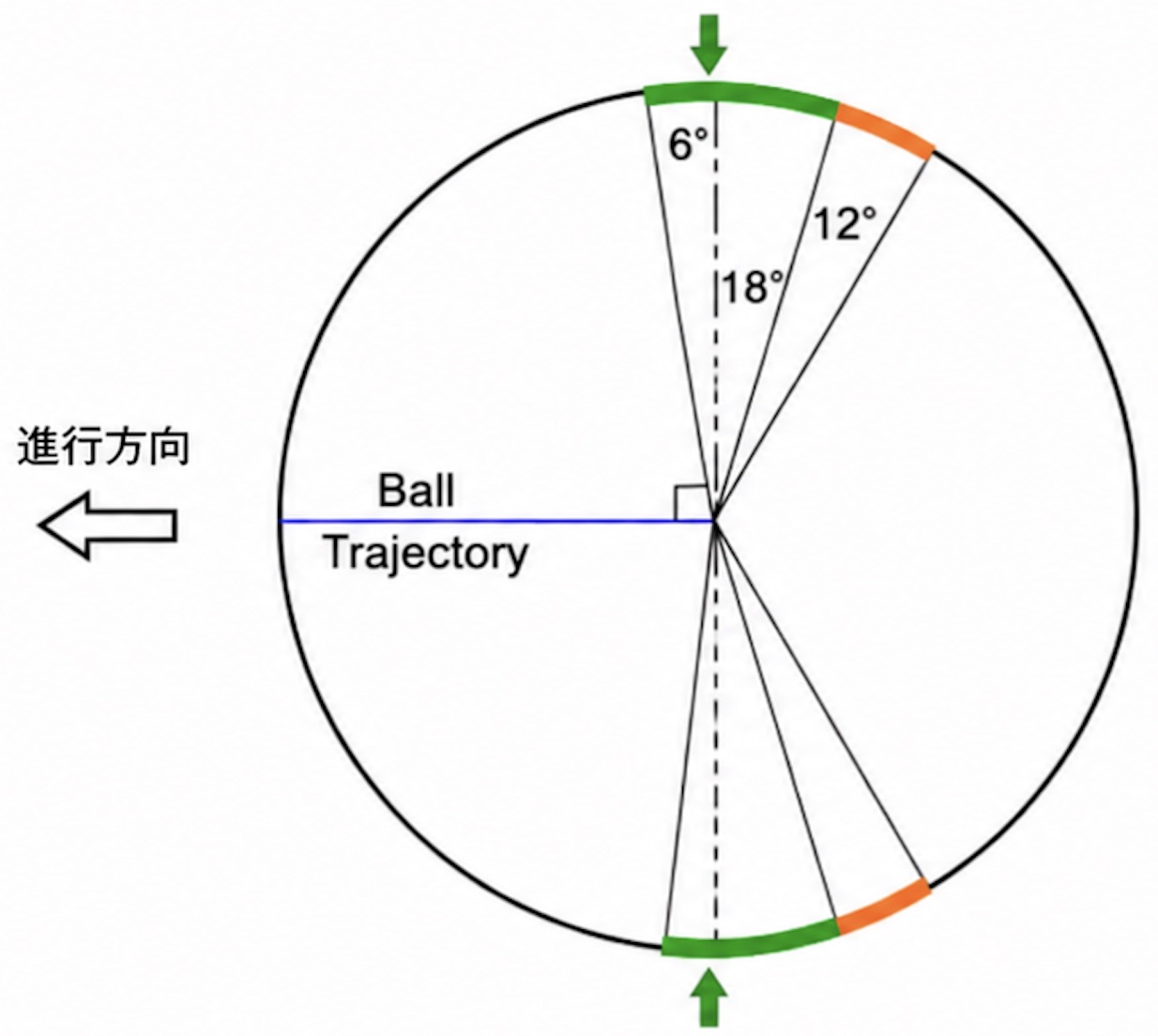
Cross-section of the ball's flight path. When a seam enters a specific angular range (-6° to 18°) (green), the airflow separation point shifts, generating SSW force. Orange = separation point without a seam.
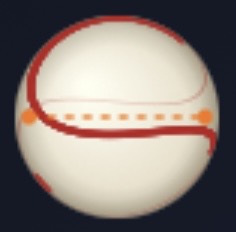
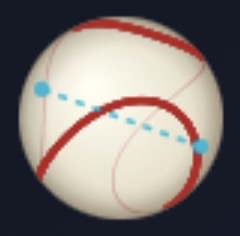
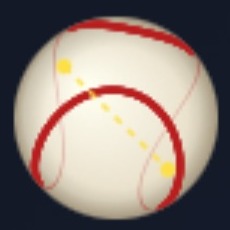
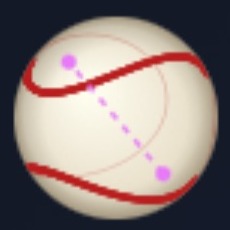
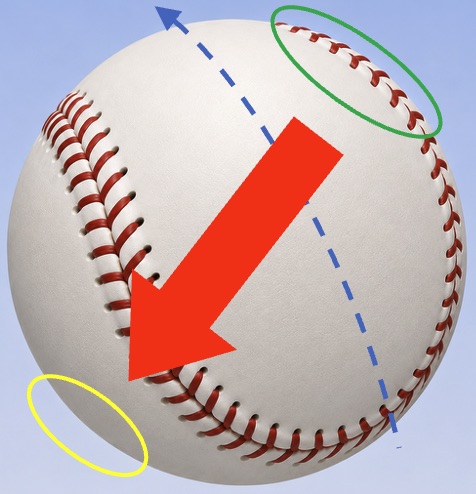
A 2-seam grip seen from the catcher's view. When seams are concentrated on the green ○ side and absent on the yellow ○ side, this asymmetry generates SSW force in the red arrow direction. Dashed arrows show ball rotation direction.
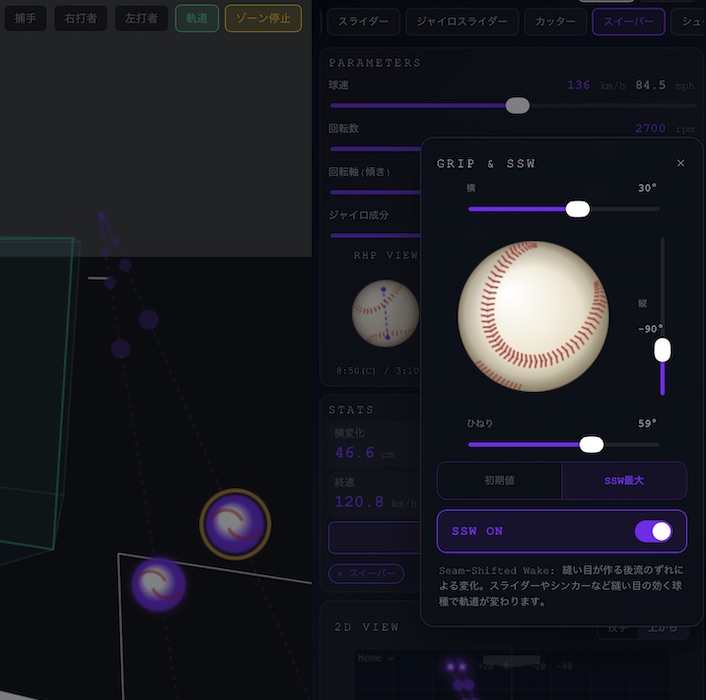
In v2.0, tap the ball to open the "GRIP & SSW" dialog, adjust seam orientation on 3 axes (2-seam types use "twist" only), and experience SSW effects. Compare trajectories with SSW ON/OFF or use the "Max SSW" button to auto-search for the optimal grip angle.
* The 4-Seam Fastball does not support "GRIP & SSW" because SSW effects are negligible. The Knuckleball is excluded because it uses a pseudo model. * SSW effects are calculated based on the speed, spin axis, and gyro component at the moment the dialog is opened (spin rate does not affect SSW).
iPad version. SSW ON/OFF comparison (gold ring = SSW). When SSW is ON, seam stitching appears on the ball.
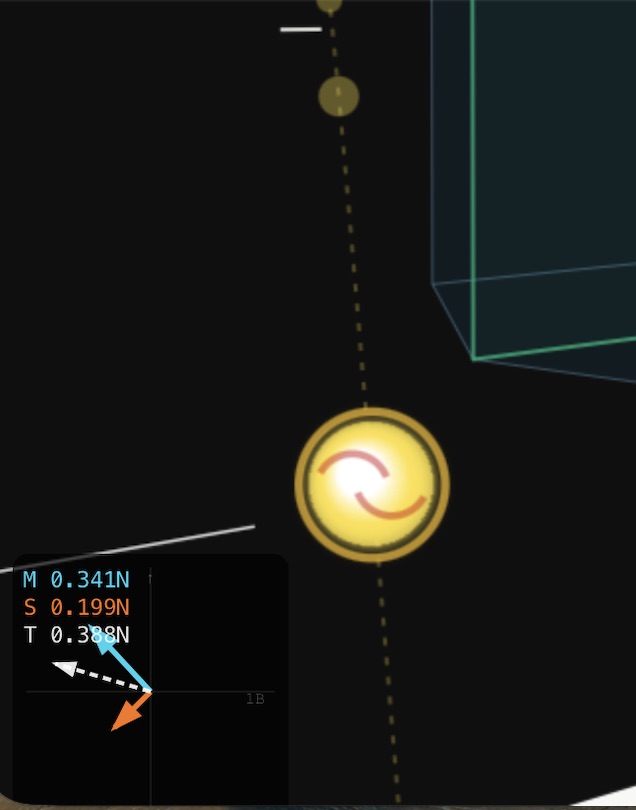
Force vectors displayed in the 3D view (bottom-left). M (cyan) = Magnus force, S (orange) = SSW force, T (white, dashed) = resultant force. Arrow direction and length show each force's magnitude in real time, making it easy to see how SSW combines with Magnus to alter the trajectory.
JUDGEMENT
Two Strike Zone Modes to Test Your Pitch
PitchSim includes both ABS and official rulebook judgement modes. See how the same pitch can be called differently depending on the system.
ABS (Automated Ball-Strike)
Based on the MLB ABS Challenge System. Checks the 2D plane at the front of home plate. A pitch is a strike if the ball center is within one ball radius (3.7 cm / 1.46 in) of the zone boundary.
Official Rules (3D Judgement)
Rulebook-compliant 3D check. If any part of the ball passes through the pentagonal prism above home plate (the strike zone), it's a strike. Catches sharp-breaking pitches that clip the zone before the plate.
⚠️ When They Disagree
When ABS and official rules give different results, a warning appears in the JUDGEMENT panel. This often happens with sharp-breaking pitches like curveballs and sweepers. Try switching between both modes to compare.
STATCAST
Turn Statcast Numbers into 3D Trajectories
Plug in numbers from Baseball Savant directly. See "why it breaks that way" in 3D.
Yu Darvish 2025 Sweeper
Speed82.8 mph = 133.3 km/h
Spin Rate2745 rpm
Spin Axis (Tilt)8:30 (C)255°
Gyro65 ° = Active Spin 42%
* Statcast reports two types of spin axis.
• Spin-Based: Pure axis derived from spin direction. PitchSim's Tilt uses this.
• Observed: Apparent axis back-calculated from actual movement. Includes seam effects (SSW / Seam-Shifted Wake).
Since v2.0 implements SSW physics, using the Spin-Based axis value will automatically reproduce the additional SSW-induced movement.
ABOUT THE PHYSICS
Let's Be Honest. There Are Margins of Error.
No simulator is perfect. But when you understand where the errors come from, exploring the parameters becomes the fun part.
🎯
Built on the Nathan Model
Based on Prof. Alan Nathan's baseball physics model (Univ. of Illinois, 2008). Vertical movement matches Nathan's theoretical values within ±15% for major pitch types.
✓ Physical validity confirmed
📐
Vertical break within ±3 in of Statcast
Calibrated against MLB measured data. 4-Seam, Curveball, and Sinker match Statcast MLB averages within 2 inches. v2.0's SSW implementation also improves accuracy for Slider, Cutter, and Sweeper.
✓ Accuracy improved with SSW
⚠️
Main sources of error
① Gyro angle is not published by Statcast and must be estimated (±5-15° uncertainty) ② Release point is fixed (height, extension, and lateral offset)
Accuracy depends on input quality
🔬
SSW — Physics-based in v2.0
Seam-Shifted Wake (SSW) is a phenomenon where seam orientation causes asymmetric airflow separation, generating a force beyond Magnus. Based on research by Prof. Barton Smith (Utah State Univ.). SSW is a delicate effect where even a few degrees of grip angle change can significantly alter the break. Treat this as a model for understanding how SSW works, not as an exact match to real pitches.
Implemented — real-world differences remain
📍
Release Point — Coming Soon
Currently, the release point is fixed (height: 2.054 m / extension and lateral offset not adjustable). Real pitchers vary in release height, extension, and lateral position, all of which affect trajectory. Statcast and Rapsodo record these as measured values, and future versions will support them as inputs.
Planned for a future update
🔍
That's what makes it interesting
When you adjust the gyro angle or spin axis to figure out "why the numbers don't match Statcast," you're learning the physics of that pitch. It's a tool for exploring answers, not just seeing them.
➖
When STATS show "−"
The following cases cause certain values to display as "−":
① Ground hit: The ball hits the ground before reaching home plate. All STATS show "−".
② Baseline ground hit: The pitch reaches the plate, but the "no-spin baseline trajectory" hits the ground at that speed, making hop calculation impossible. This is physically correct — the ball only reaches the plate because of Magnus force.
③ Knuckleball: The random perturbation model makes break values indeterminate. Only exit velocity is shown.
PITCH MODEL
Release Angle Adapts to Speed
Slower pitches are released with an upward angle, faster pitches with a downward angle, to deliver the ball into the zone. PitchSim automatically adjusts the release angle for each speed range.
56–61 mphUpward −4.5°
75–80 mphSlightly upward −0.25°
87–93 mphSlightly downward +0.5°
93+ mphDownward +1.5°
* Angles are corrections added to the launch angle needed to reach the target. Additional ±1° correction applied per pitch type.
SIMULATION PARAMETERS
Physical Constants Used in the Calculations
PitchSim uses the following fixed values as the basis for trajectory calculations.
Pitcher / Mound
Release Height6.74 ft (2.054 m)
Pitching Distance60.5 ft (18.44 m)
Batter / Strike Zone
Batter Height (default)5'11" (1.80 m)
Zone Top3.16 ft (height × 53.5%)
Zone Bottom1.59 ft (height × 27%)
Zone Width17.13 in (MLB official)
Batter Eye Position59.84 ft from mound
Home Plate Area
Dirt Circle Radius13 ft (3.96 m)
CHANGELOG
v2.1Aug 24, 2026
Mac (Apple Silicon) support. Available on the Mac App Store as "Designed for iPad."
v2.0Aug 17, 2026
SSW (Seam-Shifted Wake) physics implemented. GRIP & SSW dialog with 3-axis seam adjustment, SSW ON/OFF toggle, and auto-optimization. Force vector display (M/S/T) and seam rendering on the ball. Presets expanded from 11 to 15 (Sinker, Cutter, 2 SSW demos added). Pitch comparison expanded from 4 to 8. Knuckleball now free. Color palette redesigned for 15 pitches.